
Where Could We Go From Here
How one physician-scientist is reshaping research in adolescent mental health
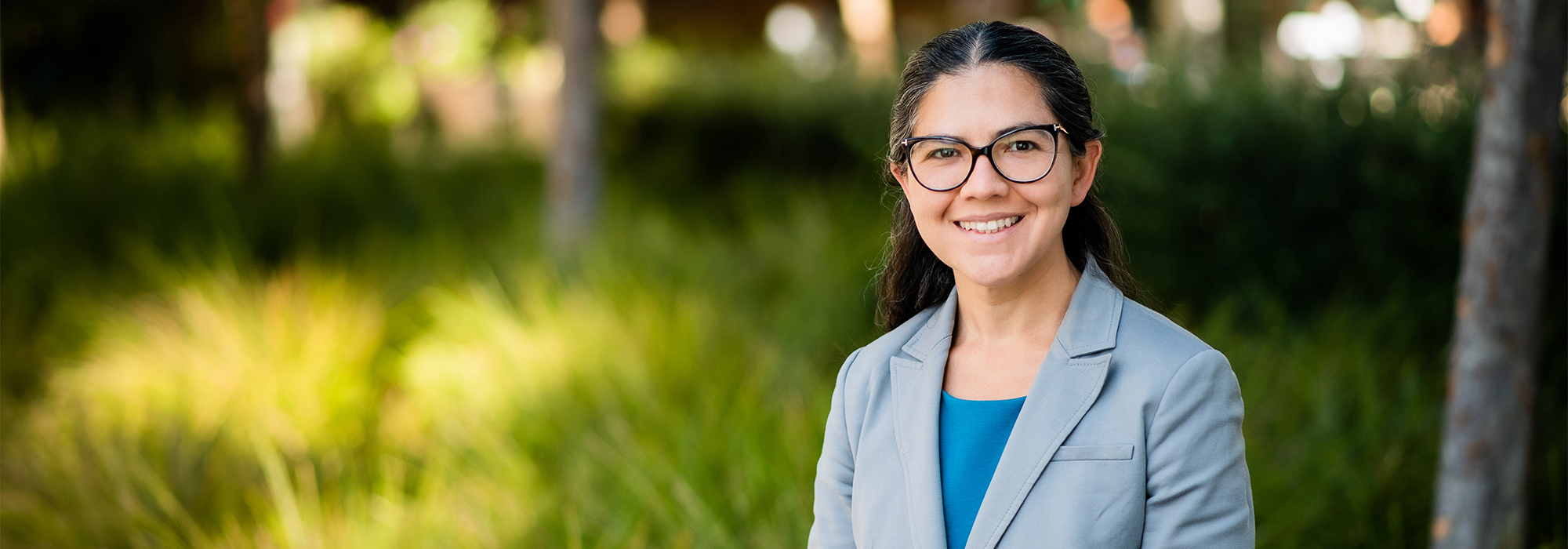
Growing up in New Mexico, Marissa Raymond-Flesch, MD, MPH, saw firsthand how teen pregnancy, violence, and substance use shaped the lives of young people. Those experiences sparked her interest in adolescent medicine and continue to shape her work at UCSF Benioff Children’s Hospitals, where she studies eating disorders, psilocybin-assisted therapy, and GLP-1 medications.
You started out focusing on reproductive health and moved into eating disorders. What shaped that journey?
Research is expensive, and it’s a privilege to do it. I really try to stay grounded in one question: What is the most impactful thing I could be doing right now?
When I first entered adolescent medicine, reproductive health felt like the most impactful place to start because of what I had seen growing up and in clinic.
Then COVID hit. The number of young people presenting with eating disorders literally skyrocketed. They weren’t just more numerous, they were much sicker too. It quickly became the most urgent need in front of me.
That’s when I started asking myself, What new ideas do I have? What box haven’t we opened yet? Where could we go from here?
I remember one patient in particular who was incredibly ill. I realized I had nothing else to offer her. I went to lunch with a colleague to process how helpless I felt, and for the first time I said out loud, “I keep having this crazy idea about doing a psychedelic trial for patients with eating disorders.”
She said, "You have to do that trial." That’s really when it started.
How did you turn that vision into a study?
I had already been following some of the psychedelic work happening at UCSF, especially the MDMA trial for post-traumatic stress disorder. What stopped me in my tracks wasn’t simply that people got better but that they stayed better after treatment ended.
Usually, if you take away the intervention, people regress. Here, people continued improving. I remember thinking, "This is something totally different."
That led to SPANYA [Study of Psilocybin for Anorexia in Young Adults], a donor-funded study of psilocybin-assisted therapy for young adults with anorexia nervosa. Participants age 18 to 25 receive two supervised doses of psilocybin — a naturally occurring psychedelic compound found in some mushrooms — as well as psychotherapy before and afterward, and extensive medical and psychological screening. From the beginning, young adults who have dealt with anorexia and parents who’ve supported a child have helped shape the study.
Why psilocybin?
First, we zeroed in on serotonin, a brain chemical involved in mood and behavior. We know it is implicated in anorexia. But people who are profoundly malnourished aren’t producing enough of it for medications like SSRIs [selective serotonin reuptake inhibitors] to work well. Psilocybin works differently. It mimics the role that serotonin plays in the body.
We also think psilocybin may create greater cognitive flexibility. At its core, anorexia is an illness that pulls people into incredibly rigid patterns of thinking and behavior. A colleague of mine sometimes describes it as being like a snow globe. When you shake a snow globe, everything that had settled begins moving again before it resettles. We think psilocybin may create a similar effect where people step out of those deeply entrenched patterns long enough for therapy to help them build new ones.
What are you seeing so far?
That’s when I started asking myself, What new ideas do I have? What box haven’t we opened yet? Where could we go from here?
We’re tracking traditional outcomes like weight and eating disorder behaviors, but it’s too early to predict what the final data will look like. I can tell you that some of the most meaningful changes are what patients tell us. Some describe noticing hunger cues they hadn’t noticed before. Others simply talk about living more fully. One participant told us they’d joined two new clubs. Those may sound like small things, but for someone whose illness has become so isolating, they are massive.
Your research has also expanded into GLP-1 medications. What drew you there?
I think one of the privileges of being a researcher at UCSF is that you get to keep asking, What’s the next thing we could try?
As GLP-1 use became more widespread, people started talking about food noise — that continuous experience of thinking about what you’re going to eat next. Many people on GLP-1s report that it was just gone. That fascinated me. It made think that these medications weren’t just changing the body, they also were changing the brain. I wondered whether they could help people with binge-eating disorder by interrupting that cycle.
But there’s another side to this. These medications are already being prescribed to people as young as 12, even though we know very little about their long-term effects. Some clinicians worry that they could even make eating disorder behaviors worse over time.
With philanthropic support, we’re following young people after they’ve been prescribed GLP-1 medications by other providers. By tracking eating behaviors, mood, cognition, food noise, and other outcomes, we’re building evidence to better understand how these medications affect adolescents and whether they could eventually treat binge-eating disorder.
What continues to draw you to new ideas?
Being a scientist is genuinely a creative process. I get to think about new ideas alongside extraordinary colleagues from different disciplines.
The suffering I witness drives the need for more ideas, and I follow the ideas that have good science behind them. If I feel like our team at UCSF can investigate those ideas safely, then I think they’re worth exploring. Getting to see changes in a patient who’s struggled for so long is deeply moving.
Tell me about a new project that you’re excited about.
UCSF was just awarded a grant from the federal government to become the National Center of Excellence for Eating Disorders. This grant will allow us to reach many more pediatricians, primary care providers, and others to increase early detection and treatment for patients with eating disorders. It will amplify our impact and reach. I can't wait to get to work on it!
To learn more about how you can support Dr. Raymond-Flesch's work, contact Diana Kaw at [email protected].